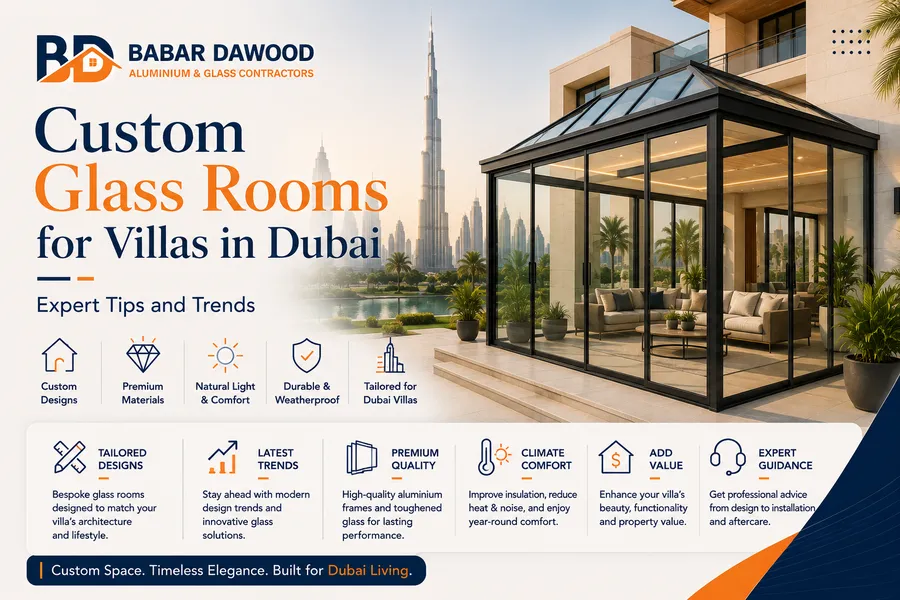
Three design directions are shaping custom glass rooms in Dubai villas right now: frameless glass enclosures that minimize visible structure, electrochromic (“smart”) glass that tints on demand instead of relying on separate blinds, and multifunctional spaces purpose-built for a specific use — a glass gym, home cinema, or entertaining room — rather than a generic sunroom. This guide covers what each trend actually involves, the design considerations specific to Dubai’s climate, and what we’ve learned from real villa installations across the Emirates.
For the full range of structural types available, see our 7 types of glass rooms comparison, or go straight to our glass room service page for a free consultation.
Trend 1: Frameless Glass Enclosures
Frameless (or minimal-frame) glass rooms use structural glazing systems that reduce visible aluminium framing to the smallest structurally necessary profile, maximizing uninterrupted glass area and sightlines. This is the direction most modern villa clients are asking for — the goal is a space that reads as an extension of the garden rather than a separate enclosed room.
Design consideration: minimal framing means the glass itself carries more structural load, which requires precise engineering and typically toughened or laminated safety glass rather than standard glazing — this isn’t a cosmetic choice, it affects the entire structural specification.
Trend 2: Electrochromic (Smart) Glass
Electrochromic glass can switch between clear and tinted states electronically, replacing or reducing the need for separate blinds or curtains. In a fully glazed room, this addresses a real practical problem: privacy and sun control without covering up the view that’s the whole point of building a glass room in the first place.
Design consideration: this is a premium feature that adds meaningfully to project cost — see our glass room cost breakdown for how advanced features like this affect your total, and confirm with your contractor whether it’s being quoted as a genuinely integrated system or a bolt-on retrofit.
Trend 3: Multifunctional, Purpose-Built Spaces
Rather than a general-purpose sunroom, more villa clients are designing glass rooms around a specific use — home gyms with garden views, home cinemas with light-control glazing, or entertaining spaces with integrated kitchens. This shift changes the design brief substantially: a glass gym needs ventilation and heat management considered differently than a cinema room needs light control considered differently than an entertaining space needs acoustic and layout planning.
Design consideration: define the primary use before finalizing glazing type — a home cinema benefits from tintable or shaded glass and acoustic treatment, while a gym prioritizes ventilation and heat management over light control.
What We’ve Learned From Real Villa Installations
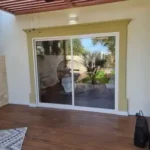
On a recent luxury glass room project in Arabian Ranches, Dubai, the brief was a seamless indoor-outdoor space that stayed genuinely usable through Dubai’s heat. The specification we used illustrates how these design decisions come together in practice:
- 10mm clear tempered glass for maximum clarity and structural safety
- Powder-coated aluminium frames for corrosion resistance and a clean, modern finish
- Solar-control glass to manage indoor temperature without sacrificing the view
- Integrated fly screens for ventilation without insect intrusion
- Seamless sliding doors for smooth, low-maintenance indoor-outdoor access
This is a useful reference point precisely because it shows how “frameless-style” design (slim powder-coated framing, maximum glass) and climate performance (solar-control glazing) aren’t competing priorities — they’re specified together.
Climate and Insulation: The Non-Negotiable Behind Every Trend
Whatever design direction you choose, Dubai’s climate sets real constraints:
- Solar heat gain is the dominant factor — solar-control or Low-E glazing isn’t optional for a space you actually want to use in summer, regardless of which design trend you’re following
- UV exposure affects material choice — powder-coated aluminium resists fading and degradation better than untreated finishes over years of intense sun
- Ventilation matters even in a climate-controlled space — integrated fly screens and openable sections allow natural airflow during Dubai’s more temperate months without fully relying on AC
Privacy Without Losing the View
Privacy is a common concern with fully glazed structures, and there are several approaches beyond electrochromic glass:
| Approach | Best for |
|---|---|
| Electrochromic smart glass | Villas wanting on-demand privacy without visible window treatments |
| Frosted or tinted glass panels (fixed) | Lower-cost privacy for specific walls facing neighboring properties |
| Strategic landscaping | Natural screening that complements rather than blocks the garden connection |
| Automated blinds (external mount) | Traditional solution, works alongside any glazing type |
Structural Durability Considerations
A glass room is a long-term structural addition, not a temporary feature — durability decisions made at design stage matter for years afterward:
- Frame material and finish: powder-coated or anodized aluminium resists Dubai’s heat and occasional sandstorms better than untreated finishes
- Glass specification: tempered glass is standard for structural safety in glass room construction, engineered to break into small, less hazardous fragments if it fails, rather than large sharp shards
- Sealing and hardware: the same climate factors that affect aluminium door hardware — sand, UV, and coastal humidity — apply to glass room frames and sliding mechanisms
Frequently Asked Questions
Is frameless glass more expensive than standard framed glass rooms? Generally yes, since minimal framing requires more structurally engineered glass and precise installation — see our cost breakdown for how specification choices affect total price.
Can electrochromic glass be added to an existing glass room, or only new builds? It’s typically specified and integrated during construction for the best result, though retrofit options exist depending on the existing frame system — discuss your specific structure during a consultation.
What’s the best glass room design for a home gym? Prioritize ventilation and heat management (openable sections, fly screens, solar-control glazing) over privacy-focused features like heavy tinting, since gym use typically wants natural light and airflow.
Do design trends like frameless glazing affect permit requirements? The permit process is driven more by structure type and Built-Up Area changes than glazing style — see our types comparison guide for permit complexity by structure type.
Final Step
Ready to design your glass room? Request a free consultation and we’ll help translate these design directions into a specification suited to your property. For the full installation process once you’ve decided on a design, see our step-by-step process guide.